

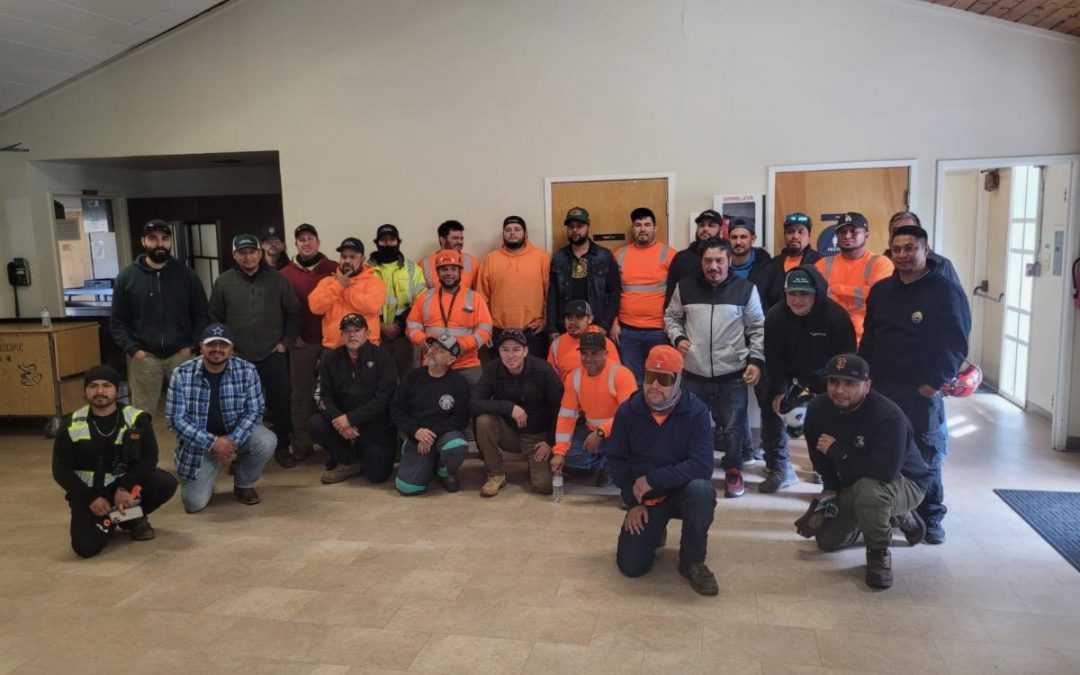
Bay Area Tree Specialists is responsible for providing our staff with the necessary training covering various safety protocols and operational procedures. We provide superior safety training and certification to our tree care professionals on a wide range of specialized skills and techniques. This education helps workers recognize potential hazards and understand the correct ways to mitigate them. Ensuring our workers are trained and certified is the first step towards a safe tree services process.
Comprehensive Safety Training
Comprehensive safety training covers a range of topics and ensure that all employees are aware of potential hazards in the workplace and the procedures that need to be followed to minimize the risk of accidents or injuries. The key features that a comprehensive safety training program should are: Hazard identification and risk assessment This involves identifying potential hazards in the workplace and assessing the level of risk associated with each hazard.
Safety policies and procedures
The training program covers the organization’s safety policies and procedures, including emergency procedures and protocols for reporting incidents or injuries. Stringent safety policies are key to a safe work environment.
Equipment and machinery safety
Employees should be trained on the safe use of equipment and machinery, including how to properly operate, maintain, and repair them.
Personal protective equipment (PPE)
Employees should be trained on the proper use and maintenance of PPE, including when and where it should be used, and how to properly store and maintain the equipment.
Environmental safety
This includes training on hazardous materials handling, electrical safety, fire safety, and other environmental hazards that may be present in the workplace.
Behavior-based safety
This comprehensive safety training program focuses on promoting safe behaviors and attitudes among employees, encouraging them to take responsibility for their own safety and the safety of their colleagues.
CPR and First Aid Training
CPR (Cardiopulmonary Resuscitation) and First Aid training are important for tree care professionals. Every day, our staff navigate job site hazards that can potentially cause injury. Many of these hazards can be prevented with safety training and education. But even the best laid plans can go awry, and when they do, our staff will be ready to respond quickly and professionally.
Aerial Rescue Rope & Saddle
Aerial rescue is likely to be undertaken in emergency situations with little or no supervision. A climber might require rescue for a number of reasons. For example, a falling limb could knock them unconscious, they could pass out from intense heat, or a stinging insect could cause a severe allergic reaction. How to properly rescue someone from a tree can be more challenging than one may think. What if the tree is in a wilderness situation, how would search and rescue teams access the tree to retrieve the victim? Our staff is trained in preparing and planning for the coordination and execution of rescue operations.
Certified Line Clearance Tree Trimmer
Our certified Line Clearance Tree Trimmers are workers who, through related training and on-the-job experience, are familiar with the special techniques and hazards involved in line-clearance tree trimming without bodily entry into the Minimum Approach Distance (MAD). Line-clearance tree trimming refers to the pruning, trimming, repairing, maintaining, removing, or clearing of trees or the cutting of brush that is near (within 15 feet of) energized power lines.
EHAP Electrical Hazard Awareness Program
All staff is trained to recognize and avoid electrical hazards. Training Includes:
- How electricity works
- Basic terminology
- Current standards & regulations
- Electrical hardware identification
- Hazard assessment
- Estimating nominal voltage
- Line clearance pruning practices to reduce exposure
- Recent incidents involving tree workers & electrical conductors
- Emergency response to electrical contact incidents involving workers who are aloft
- “Our employees learn by example. If they don’t see us practicing good safety habits, they won’t think safety is important.”