

Arborists in San Jose, CA, Detail How to Care for Trees in the Winter
Your Winter Tree Care To-Do List
The first big winter storm in San Jose has a way of exposing which trees were already in trouble. Branches that seemed fine in October suddenly snap. A tree that always leaned “just a little” starts tipping more after weeks of rain. Most of the time, those failures don’t come out of nowhere. They’re the result of old wounds, hidden decay, compacted soil, or past pruning decisions finally meeting saturated ground and strong wind.
The good news? You can spot a lot of these issues before the storm season hits and address them with thoughtful tree care. This guide walks through how winter really affects trees in the South Bay, what to look for as the weather turns, and how to use professional tree service and arborist support to reduce risk while protecting tree health.
Why Trees Often Fail in Winter (Even in a Mild Climate)
San Jose doesn’t deal with blizzards, but our winter pattern is still hard on trees: a mix of “atmospheric river” rain events, gusty wind, cooler nights, and long periods of wet soil. That combination is exactly when marginal trees tend to fail.
Common winter stressors include:
-
Wind hitting full canopies: Dense, heavy canopies act like sails. If a tree has weak branch unions, previous storm damage, or poor structure, winter gusts can pull those weaknesses apart.
-
Saturated soils and weakened roots: After repeated storms, soil can lose strength. Trees with shallow roots, restricted rooting space, or past root damage are more likely to lean, heave, or uproot when the ground is saturated.
-
Freeze–thaw cycles on already stressed wood: Occasional cold nights can worsen existing cracks or open old wounds, making it easier for decay organisms to move in.
Read Your Trees Like a Map: Where Is the Risk?
Before talking about pruning or tree removal, it helps to see your yard the way an arborist does. Instead of looking at trees as a backdrop, think of them as targets and weak points.
Ask yourself:
-
If this tree or a big limb failed, what would it hit? The house? A deck or patio? A driveway? A neighbor’s fence?
-
Does the tree look symmetrical, or is most of its weight leaning in one direction?
-
Are there obvious defects like large dead limbs, cracks, cavities, or old cut stubs?
-
Do you see mushrooms, oozing sap, or multiple holes in the trunk or major limbs?
Trees that combine visible defects with high-value targets underneath are the ones that deserve priority. That’s where a formal tree risk assessment from a qualified arborist is especially valuable: they can sort out which trees are relatively safe and which are living on borrowed time.
Storm-Proofing the Canopy (Without Butchering the Tree)
When people think “winter prep,” they often think “cut it way back so it doesn’t fall.” Unfortunately, aggressive topping or stripping out the canopy is one of the fastest ways to ruin tree health and create future hazards.
Effective, winter-focused tree pruning is more strategic:
-
Remove obvious hazards first: Dead, cracked, or partially detached limbs high in the canopy are the ones most likely to come down during high winds. Removing those under controlled conditions greatly reduces risk.
-
Reduce leverage, not just length: Long, overextended branches that stretch over roofs, driveways, or play areas can sometimes be shortened back to strong, interior branches. The goal is to reduce weight at the tip while preserving natural structure.
-
Address co-dominant stems and included bark: Where two large stems grow side by side with a narrow “V” between them, the attachment is often weak. An arborist may recommend selective pruning or, in some cases, support systems like cabling or bracing to manage the risk.
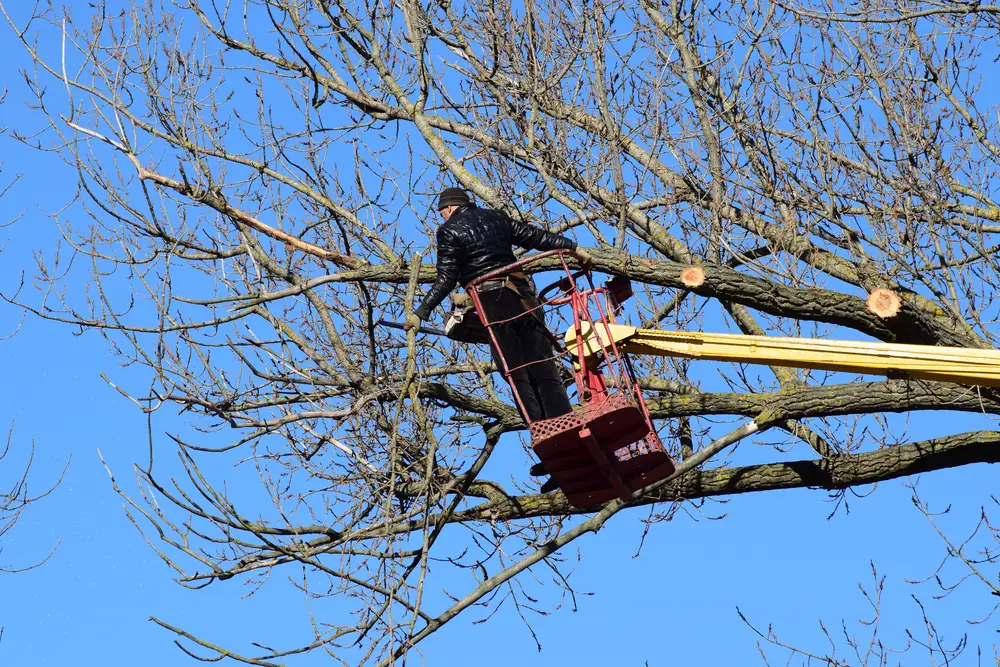
Good canopy work is subtle from the ground: the tree still looks like a tree, just more balanced and less overloaded. A professional tree service company has the training, climbing gear, and rigging systems to do this safely and to industry standards.
Roots, Slopes, and Sidewalks: What’s Happening Underfoot
A lot of winter tree failures in San Jose have less to do with branches and more to do with what’s going on underground. Roots carry both the weight of the tree and the constant stress of urban conditions.
Winter is a good time to pay attention to signs like:
-
Soil lifting or cracking on one side of the trunk: This can indicate recent movement or a root plate that’s starting to pivot, especially after big storms.
-
Trees crowding retaining walls, foundations, or sidewalks: Limited rooting space and hardscape barriers can force roots into shallow or one-sided patterns, reducing stability.
-
Chronic standing water near the base: If water pools around the trunk after every storm, roots may be struggling for oxygen. Over time, this can encourage decay and root disease.
For trees you want to preserve, an arborist may recommend plant health care steps that don’t involve digging or replacement, like aeration, selective root pruning, or changes to irrigation and drainage.
In other cases, especially where a tree and a structure are clearly competing, tree removal may be the most responsible option.
When a Tree Stops Being an Asset and Becomes a Liability
Trees add shade, character, and value to a property—until they don’t. Part of winter preparation is being honest about which trees enhance your landscape and which are just waiting for the next storm.
You may want to discuss removal with a tree care professional when:
-
The canopy is mostly dead or declining, and each year looks worse than the last.
-
There’s a large cavity, major decay, or deep cracking in the trunk.
-
Previous storms have already taken out big structural limbs, leaving a lopsided or unstable form.
-
The tree leans significantly toward a house, parking area, or other high-value target, and that lean has increased over time.
Removing a failing tree before winter storms ramp up can prevent far more damage than it causes, and it may also give nearby trees more space and resources to thrive.
Building a Winter Tree Care Routine You’ll Actually Follow
You don’t need a complicated calendar to take good care of your trees. A simple, repeatable routine is enough for most properties:
-
Once a year, get a professional look. Schedule a tree inspection or tree risk assessment with a certified arborist. Use that visit to identify priority trees, necessary pruning, and any tree health concerns, such as disease or pests.
-
After big storms, walk the property. Take a slow lap after major wind or rain events. Look for new cracks, hanging limbs, fresh mushrooms, or any tree that suddenly looks different than it did a month ago.
-
Act on recommendations—don’t file them away. If an arborist flags a tree for corrective work or removal, put it on the schedule. Waiting another year usually doesn’t make the problem cheaper or safer.
About Bay Area Tree Specialists
Bay Area Tree Specialists provides professional tree service throughout San Jose and the surrounding communities, focusing on safety, science-based decision-making, and long-term tree health. If you’re wondering how your trees will handle the upcoming winter, or you’ve already noticed cracks, dead limbs, or leaning trunks, contact our experts today to ensure your home is ready for seasonal changes.