
Bay Area Tree Specialists in San Jose, CA, Shares What It Really Takes to Keep Redwoods Healthy in an Urban Landscape
Why Caring for Redwoods at Home Is Different from Caring for Them in the Forest
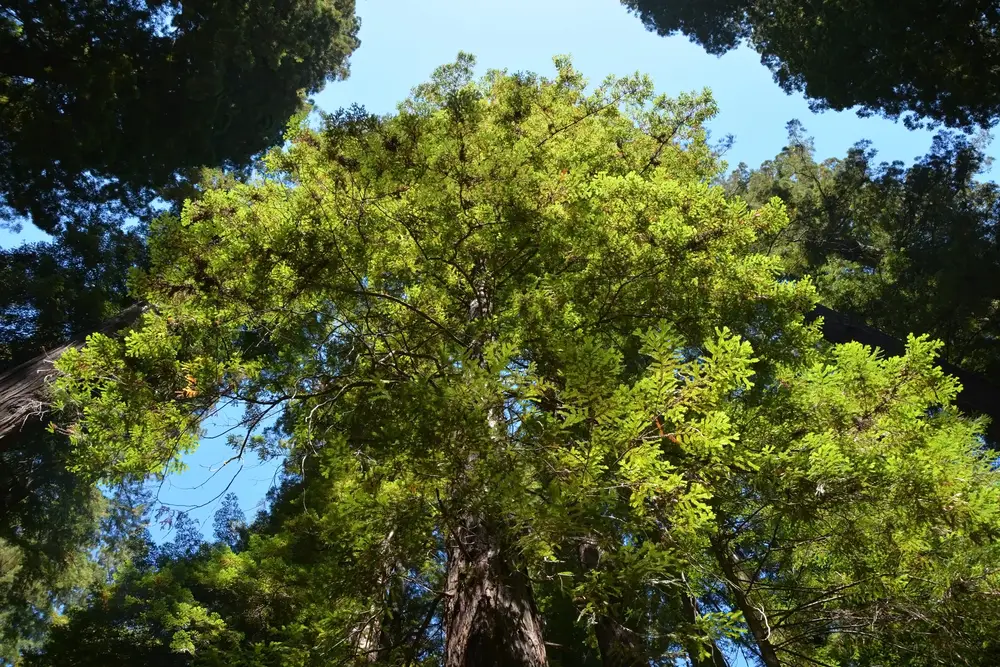
There are few things more striking in a Bay Area yard than a mature coast redwood. They bring a sense of scale and permanence that no other tree quite matches – and in neighborhoods across San Jose, Los Gatos, the Santa Cruz Mountains foothills, and throughout the South Bay, they’re a beloved and deeply rooted part of the landscape.
But here’s something many homeowners don’t fully appreciate until something goes wrong: redwoods growing in urban and suburban settings face a set of challenges that their forest counterparts simply don’t. Compacted soils, irrigation that doesn’t match their needs, reduced fog, heat stress, and proximity to structures all create conditions that a forest redwood would never encounter. Managing a redwood on a residential property well requires understanding what those trees actually need – and what common maintenance mistakes can quietly undermine even a healthy one.
At Bay Area Tree Specialists, we work with redwoods throughout the South Bay and surrounding communities. Here’s what we’ve learned about keeping them healthy for the long haul.
Understanding What Redwoods Actually Need
Coast redwoods (Sequoia sempervirens) evolved in a narrow coastal band of Northern California and Oregon – a cool, fog-drenched environment with deep, well-draining soils and consistent moisture year-round. That’s their baseline. Everything about caring for them in a residential setting is essentially about recreating as many of those conditions as possible while managing the realities that can’t be changed.
The single most important factor for redwood tree health in the South Bay is water. Redwoods are thirsty trees. In their natural range, they supplement rainfall by drawing moisture directly from coastal fog – a process that can account for a significant portion of their annual water intake. Research has shown that Bay Area fog has declined roughly 30% since the 1950s during the summer months, precisely when redwoods need it most. That decline, combined with California’s periodic drought cycles, puts real stress on urban redwoods that aren’t receiving supplemental irrigation.
A mature residential redwood can require substantial water each week during dry months – not shallow surface watering, but deep, slow irrigation that reaches the full depth of the active root zone. Short, frequent watering encourages surface rooting and doesn’t support the deep root system that keeps large trees stable and well-nourished.
The Drought-Disease Connection You Need to Know About
One of the most important things to understand about redwood tree health is that drought stress rarely kills trees directly. What it does is open the door.
When a coast redwood is water-stressed, its natural defenses drop. It becomes significantly more vulnerable to opportunistic pathogens and pests that a healthy, well-hydrated tree would typically fend off without issue. Research into declining urban redwood populations in California has found a strong association between prolonged drought periods and the spread of Botryosphaeriaceae fungi – a group of canker-causing pathogens that can cause serious dieback and structural damage in weakened trees. Bark beetles are another threat that targets drought-stressed redwoods, exploiting trees that no longer have the resources to resist them.
The practical implication for homeowners is this: consistent, appropriate irrigation isn’t just a growth strategy. It’s a tree disease prevention strategy. A redwood that receives adequate water during dry months is a redwood with functional defenses. One that’s been slowly drying out for a season or two is far more likely to develop the kind of health problems that require significant intervention – or that become irreversible.
What Good Redwood Pruning Looks Like – and What to Avoid
Tree pruning is one of the areas where the gap between good redwood care and harmful redwood care is widest. There are a few common practices that are genuinely damaging to these trees, and they’re worth understanding before anyone picks up a saw.
-
The worst thing you can do: limbing up excessively. It’s a familiar sight in Bay Area neighborhoods – a redwood stripped of its lower branches all the way up the trunk, leaving just a tuft of foliage at the top. Homeowners do it for light, for views, or because someone told them it was good for the tree. It isn’t. Redwoods photosynthesize through their entire canopy, including lower branches. Removing too much foliage at once removes the tree’s ability to feed itself and store energy. It also leaves large wounds that take years to compartmentalize and can become entry points for decay and tree disease.
-
Timing matters. The optimal window for pruning coast redwoods in the Bay Area is late winter to early spring – during the tree’s short dormant period, before the first flush of new growth. Pruning at this time allows wounds to begin healing with the energy of spring growth behind them. Pruning during summer drought stress or during active growth spurts is harder on the tree.
-
What good pruning actually accomplishes: The goal of tree trimming on a residential redwood isn’t to dramatically reshape or reduce it. It’s to remove dead, damaged, or diseased branches; to improve airflow through the canopy (which reduces moisture buildup and fungal pressure); and to address any structural concerns – particularly in trees that grow close to structures or have developed co-dominant leaders that create long-term stability issues. Every cut should have a purpose, and every cut should be made in a way that the tree can heal from cleanly.
-
Windsail pruning for large canopies. Mature redwoods with dense, expansive canopies can develop significant wind resistance – a real concern in the Bay Area’s atmospheric river seasons when high winds are common. Selective canopy thinning, sometimes called windsail pruning, reduces the leverage that wind exerts on major limbs and the trunk, lowering the risk of limb failure or whole-tree failure in storm conditions. This is specialized work that requires an arborist who understands both the tree’s biology and the structural mechanics of how large trees respond to wind loading.
Soil and Root Zone: The Foundation of Tree Health
A redwood’s root system is surprisingly shallow and wide-spreading relative to its height – which has significant implications for how we care for the soil around them. Compaction in the root zone is one of the most damaging and least visible threats to urban redwood health.
Foot traffic, parked vehicles, construction activity, and even years of mowing can compact the soil around a redwood’s roots to the point where water infiltration, air exchange, and root expansion are all compromised. The tree may look fine from the outside for years while its root zone is slowly deteriorating beneath the surface.
A few things homeowners can do to protect the root zone:
-
Maintain a mulch layer 3–4 inches deep under the canopy, keeping it 6 inches away from the trunk itself. Mulch conserves moisture, moderates soil temperature, and supports the biological activity that healthy soil needs. Avoid rock mulch, which increases water demand and can raise ground temperatures.
-
Keep turf grass and competing plants out from under the canopy. Lawn irrigation schedules designed for grass are almost never appropriate for redwoods, and lawn grass competes directly for the moisture redwoods need.
-
Minimize disturbance in the root zone – especially before and during any construction or landscaping projects near the tree.
If a redwood has been in a compacted location for years and is showing signs of stress, a professional plant health care assessment can evaluate whether soil aeration, amendment, or other interventions might help.
Recognizing Signs That Something Is Wrong
Redwoods are resilient trees, but they do communicate when they’re struggling. Knowing what to look for – and not dismissing early signals as cosmetic – gives you a much better chance of intervening before a problem becomes serious.
-
Brown foliage on interior branches is normal seasonal needle drop for redwoods and shouldn’t cause alarm. But browning at branch tips, browning that progresses outward from the interior, or a canopy that looks noticeably thinner than it did a year or two ago is worth a professional look.
-
Cankers or resinous patches on the bark can indicate fungal infection. Redwoods don’t always show obvious external symptoms early in a disease progression, which is why periodic professional evaluation matters.
-
Changes at the base of the tree – mushroom growth, soft spots, unusual discoloration at the root flare – can indicate root disease or decay that isn’t visible from above.
-
Sudden dieback in a section of the canopy, particularly after a period of drought or after nearby construction, warrants prompt attention. The cause isn’t always obvious, and misdiagnosing it leads to treatments that don’t address what’s actually happening.
When to Call an Arborist vs. What Homeowners Can Handle
There’s meaningful tree care work that homeowners can do themselves: maintaining the mulch layer, monitoring the irrigation schedule, keeping the root zone clear of competing vegetation, and watching for early signs of stress. These are the day-to-day practices that make the biggest difference in long-term tree health.
What requires a certified arborist is everything that involves being in the tree, making structural decisions, evaluating tree disease, or assessing risk. Redwoods grow tall – often much taller than they appear from the ground – and working at height in a tree this size is genuinely dangerous without proper training, equipment, and rigging knowledge.
A professional tree risk assessment is also worth scheduling for any large redwood growing near a structure, driveway, or frequently occupied outdoor space. Redwoods can grow for decades in a yard without issue, but their size means that a structural failure – a large limb or a whole-tree event – carries significant consequences. Understanding what a tree looks like from a risk standpoint, and whether any management steps would meaningfully change that picture, is information worth having.
San Jose’s Tree Protections: What Homeowners Should Know
Before any significant pruning or removal work is done on a large redwood, it’s worth understanding San Jose’s tree protection ordinance. The city protects trees it designates as “ordinance-size” or “heritage” trees – generally those with a trunk circumference of 56 inches or more measured at 4.5 feet off the ground. For multi-trunk species like redwoods, the combined circumference of all trunks counts toward that threshold. Unpermitted work on protected trees can result in substantial fines.
A qualified tree service company familiar with San Jose’s ordinance can help you understand where your tree falls, what permits are required, and how to proceed correctly – which protects both the tree and you from unnecessary complications.
About Bay Area Tree Specialists
Bay Area Tree Specialists is a San Jose, CA-based tree service company serving homeowners and properties throughout the South Bay. From tree pruning and tree trimming to tree removal, tree risk assessment, tree disease identification, and comprehensive plant health care, our team brings genuine arborist expertise to every job. If you’re looking for a tree service company that combines real expertise with straightforward communication, Bay Area Tree Specialists is ready to help.